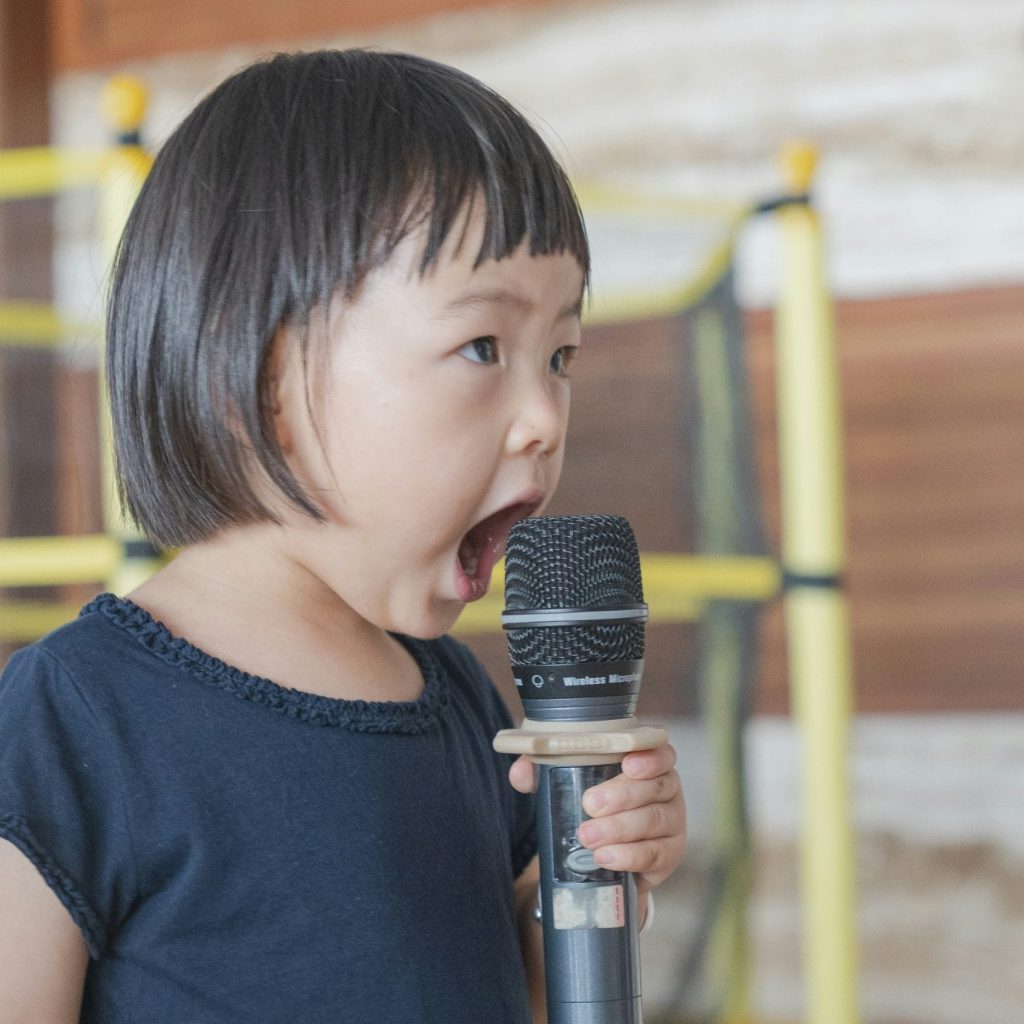
Ask any Pre-K teacher what happens when they turn a vocabulary lesson into a song, and you’ll hear the same thing: the words stick. Kids who struggle to repeat a new word back to you will belt out the same word in a song by the second chorus. It’s one of those things early childhood educators have always sensed — that music and language learning are somehow tangled up together.
A 2023 review published in the journal Children by researchers Maria Chiara Pino, Marco Giancola, and Simonetta D’Amico set out to formally examine that connection. After combing through thousands of studies and narrowing the field to twelve rigorous articles spanning infancy through the early school years, the researchers reached a clear conclusion: music plays a genuinely important role in how children acquire language — and specific musical skills predict specific language skills, not just in a vague, feel-good way, but in measurable ones.
Here’s what the research found, and why it matters for the Pre-K classroom.
Rhythm Builds Grammar
Across several of the studies reviewed, children’s ability to perceive and discriminate rhythm was consistently linked to stronger grammar skills. In one study, rhythm discrimination was actually a better predictor of grammar performance than melody. Others found that children with stronger phonological awareness — the ability to hear and play with the sounds inside words — were also better at picking out complex rhythms.
The researchers describe rhythm as the “structured arrangement of sound events over time,” and note that infants use rhythmic cues to find the boundaries between words in a stream of speech long before they understand what those words mean. In other words, rhythm isn’t decoration on top of language. It may be one of the tools children use to break into language in the first place.
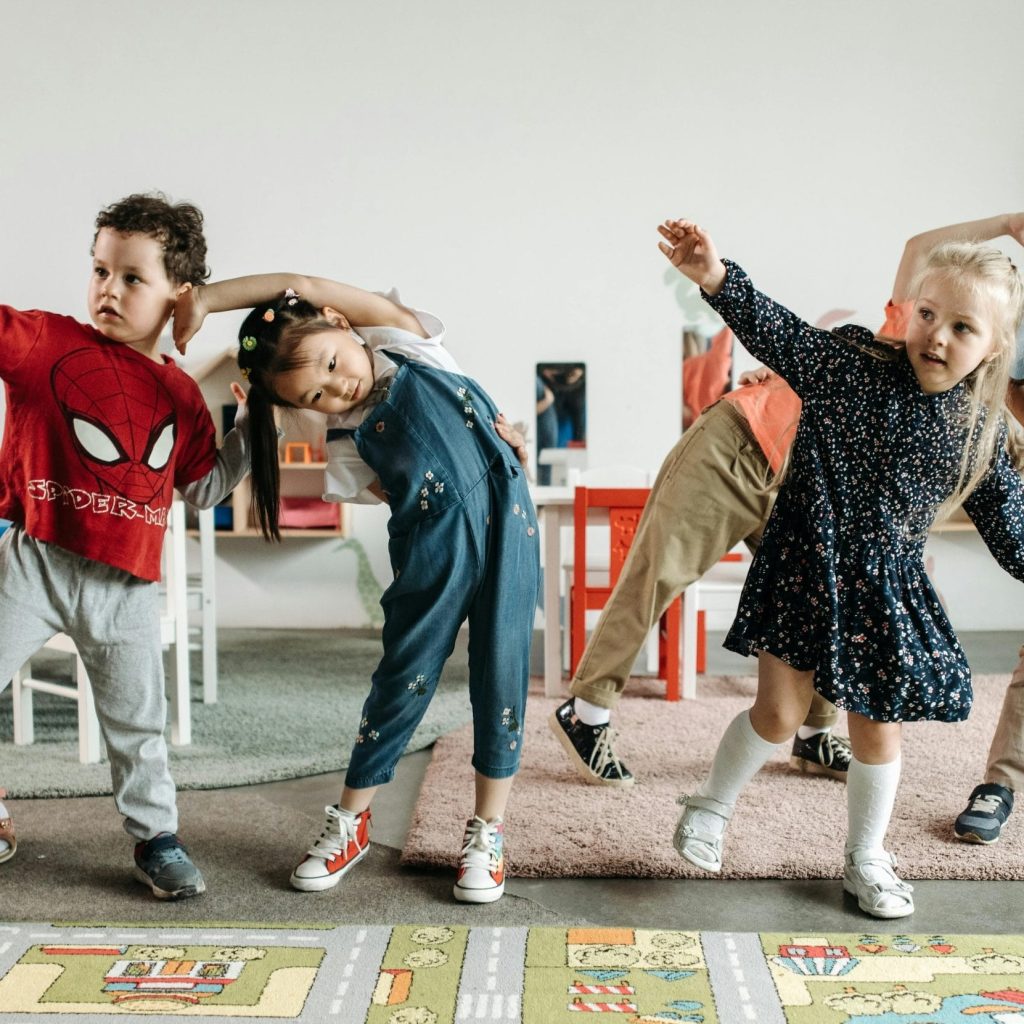
In practice: Clapping games, rhythmic chants, drumming along to a beat, and songs with a strong, steady pulse are quietly reinforcing the same skills your students need for sentence structure and grammar later on.
Melody Predicts Grammar — Especially at Preschool Age
This is the finding Pre-K teachers should pay closest attention to. One of the studies in the review focused specifically on 3- and 4-year-olds and found that children’s ability to perceive melody — patterns of pitch unfolding over time — was associated with their language grammar scores. The researchers suggest that around this age, children are internalizing both melodic structures and the grammatical structures of their native language through very similar mechanisms.
That means the exact age group filling your classroom is at a developmental sweet spot where musical and grammatical learning appear to be closely linked.
In practice: Songs with clear, repeated melodic phrases — the kind found in classic children’s songs — aren’t just catchy. At this age, they may be doing real cognitive work alongside your language instruction.
Singing at Home (and School) Builds Vocabulary
Several studies in the review looked beyond formal music training to something simpler: how much singing happens in a child’s everyday environment. The findings were striking. In one study, parents’ self-reported singing predicted their children’s vocabulary outcomes a full year later. In another, the amount of singing and music in a child’s home environment significantly predicted word comprehension in infants under 12 months old.
The researchers describe this as an enriched musical environment acting as “scaffolding” for language — not a replacement for direct language instruction, but a support structure that helps it take hold.
In practice: The songs woven into everyday classroom routines — greetings, transitions, cleanup, snack time — are contributing to vocabulary development in a way that’s easy to underestimate because it feels like “just” a fun part of the day.
Why This Matters for How You Teach
The review’s authors are careful to note that they excluded studies of formal music training programs, focusing instead on children’s natural musical abilities and everyday musical exposure. That’s an encouraging distinction for Pre-K teachers: you don’t need a structured music curriculum or specialized training to tap into this. What the research points to is the value of consistent exposure — rhythm, melody, and singing woven naturally into the fabric of the classroom day.
That’s precisely the kind of consistency Songbird Musicals is built to support. Instead of teachers needing to track down age-appropriate songs with strong rhythmic and melodic structure, or trying to remember tunes on the fly between activities, Songbird Musicals offers a ready library of Pre-K-appropriate songs designed to be sung together, often, and without friction. Given what this research suggests about the link between everyday musical exposure and language outcomes, making that exposure easy and repeatable may be one of the simplest, highest-leverage things a classroom routine can do.
The Takeaway
Every time you sing the hello song, chant a rhythm to settle the room, or work a new vocabulary word into a tune, you’re likely doing more than managing behavior or filling time between activities. According to this research, you may be reinforcing the very grammatical and vocabulary structures your students are working to acquire — at exactly the age when music and language development are most closely intertwined. Keep the songs coming. The science backs you up.
Source: Pino, M.C., Giancola, M., & D’Amico, S. (2023). The Association between Music and Language in Children: A State-of-the-Art Review. Children, 10(5), 801.