Add Your Heading Text Here
Introducing Space! A Mini-Musical for Pre-K & K That Builds Empathy and Early Reading Skills
Every teacher knows the moment. Two children who were fine yesterday are suddenly refusing to sit together. A new student arrives, and the class splits into cliques before lunch. You want to address it, but a lecture about kindness rarely sticks with four-year-olds.
Stories work better. Children remember a silly alien adventure long after they’ve forgotten a rule. That’s the idea behind Space!!, a new Songbird Musicals mini-musical for Pre-K and Kindergarten. It uses a made-up galaxy to open up conversations about fairness, judgment, and repairing friendships, and it builds early reading skills through playful sound.
What Is 'Space!' ?
Space! is an intergalactic musical adventure for ages 4–8. It runs about 12–15 minutes, so it fits into a morning meeting or an afternoon block.
A saucer full of pLackLes sets off for a relaxing trip to Flooby Fun, but they forgot to fill up on gack. Halfway there, the ship fails and they crash-land on ruffnufF, the planet they were warned to avoid.
The ruffleRs are horrified by the pLackLes’ skin and strange words, and the pLackLes feel the same about the ruffleRs. Neither side wants anything to do with the other.
Then an asteroid threatens the planet. Both groups have to work together to escape, and the story turns on what they learn about each other along the way.

Social-Emotional Learning Built Into the Story
The conflict belongs to the aliens, not to anyone in the room, so children can talk about hard social moments at a safe distance.
Judging by appearances. The ruffleRs reject the pLackLes because they look and talk differently. Ask your class: How would you feel if someone decided you weren’t welcome just by looking at you?
Choosing kindness when it’s hard. A young ruffleR sneaks food and drinks to the stranded pLackLes, even though her parents disapprove. Pause after this scene and ask: Has anyone ever done something kind even when it wasn’t easy?
Working together. When the asteroid arrives, both groups set aside their differences to escape. Use this to talk about teamwork in your own room. What jobs can children share during clean-up or a class project?
Apologizing and repairing. The show ends with both sides apologizing. Repair means taking responsibility and then working to make things right, not just saying sorry. Practice with short role-play scenarios: a block tower knocked over, a shared toy, a missed turn.
Phonemic Awareness Through Play
The dialogue is full of playful, made-up words: flacka lackled blunder, puff puff puff, yacky yack. Children don’t know these words, so they have to listen closely to the sounds themselves.
That listening builds phonemic awareness, the ability to hear and play with the individual sounds in spoken words. The National Reading Panel’s 2000 review found that teaching this skill improved children’s reading, and a later longitudinal study of children in their first year of school found phoneme awareness to be a strong predictor of reading development. Because the words are nonsense, children focus on the sounds rather than guessing from memorized sight words.
Try this after a song:
Rhyme clap: Clap when you hear a line that rhymes with the one before it.
Alien word stretch: Stretch a made-up word slowly, then say it back at normal speed.
Sound swap: Change the first sound of a made-up word and ask whether it still sounds like the same alien language.
For more song-based games, read our post, Songs That Build Phonemic Awareness in Pre-K.
Ready to Stage in Your Classroom
Everything you need to get started
We know that putting on a performance with young children takes time, so Space! comes with a collection of resources to help make preparation straightforward.
The digital package includes:
The complete musical script
A fully written script with narration, dialogue, stage directions, and flexible casting options. Lines are written for short attention spans and easy memorization.
Seven classroom lesson plans
A structured series of lessons to help children learn the songs, explore the story, and work towards the performance.
Full vocal recordings
Professional recordings of all six songs to help children become familiar with the music and learn the lyrics. Melodies are simple and repetitive, so children can join in quickly.
Printable lyric sheets
Simple lyric sheets for classroom activities and practice at home.
Printable prop templates
Easy-to-make props to help bring the story to life without complicated preparation.
Spotify listening links
Links that allow families to listen to the songs at home and become part of the experience.
Everything is delivered digitally, so you can access the materials and get started without waiting for a physical package.
Space! is designed for regular classroom teachers. You don’t need theater experience, an auditorium, or a stage.
Flexible roles: Split your class into the two alien groups, or give every child a role.
Circle-time staging: Perform on your circle rug. The pLackLes and ruffleRs start on opposite sides and move toward the middle as the story goes on, mirroring the emotional arc.
Quick FAQ
What ages is Space! for?
Q: Do I need to do a full performance, or can I just use the songs?
Q: Do my students need to know about space and planets for this to make sense?
Q: How long is the script?
Do I need musical experience to teach it?
How long does it take to prepare?
Can I use it for a whole-school event?
Making the musical your own
Every classroom is different, and the musical is designed to be flexible.
The roles can be shared or expanded, and the script can be adapted to suit your group. Children can also contribute to the creative process by helping to design props, suggest movements, create simple scenery, and come up with their own ideas.
The spaceship can be made using simple classroom materials, and the printable templates give you a starting point.
The aim is to give children a chance to take part in making the performance, rather than simply learning lines and following instructions.
Free for a limited time: Celebrate the launch of Songbird Musicals
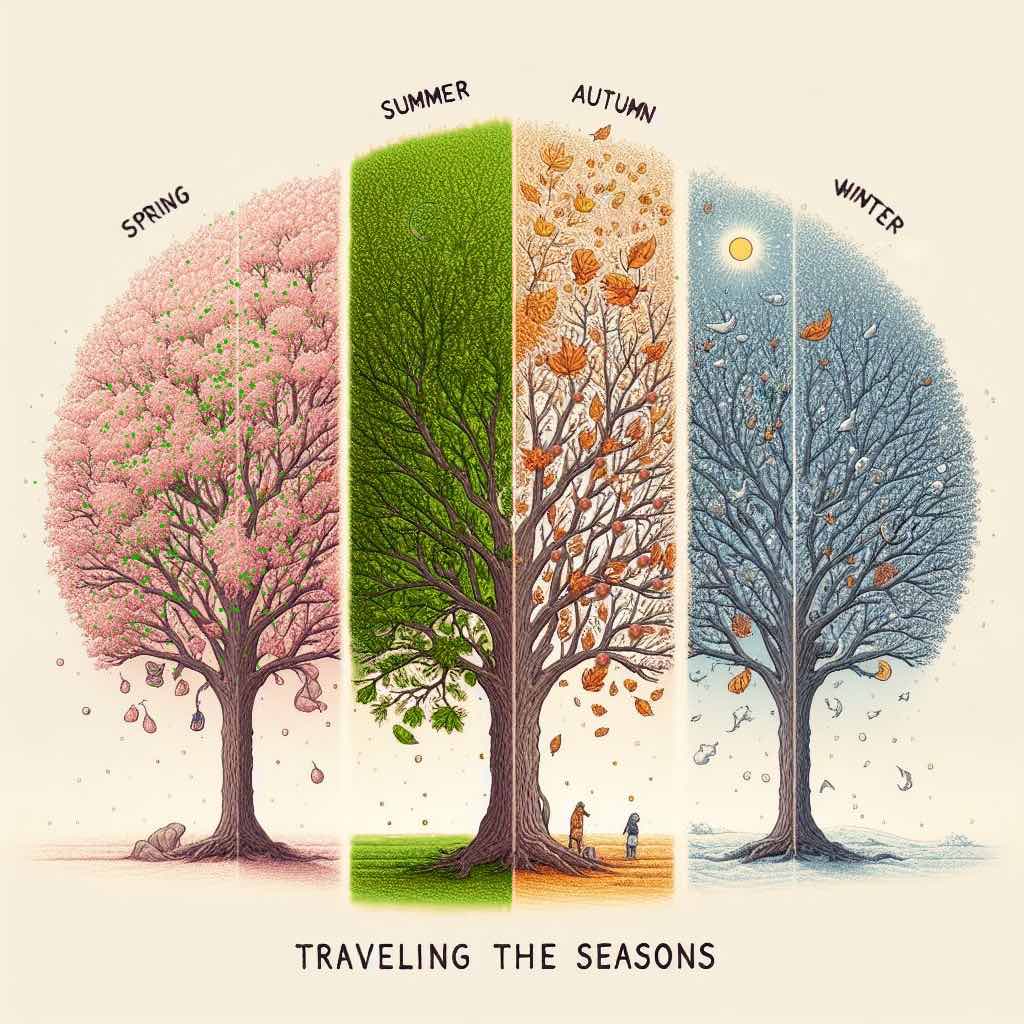
To celebrate the launch of Songbird Musicals, we’re making Traveling the Seasons available completely free for a limited time.
We wanted to give teachers a chance to try a complete musical with their class, explore the resources, and see how it fits into their teaching.
You can download the full package, including the script, seven lesson plans, six original songs, vocal recordings, lyric sheets, and printable prop templates.
There’s no need to start by putting on a full performance, either. You could begin with one or two songs, explore the story together, or use the musical as a starting point for a classroom project about the seasons.